After an abortion, it’s normal to have questions about your body, your next period, sex, and whether you could get pregnant again. One thing many people do not expect is that pregnancy can happen again fairly quickly — sometimes before your next period arrives.
That does not mean you have to rush into choosing birth control. It simply means this is a good time to understand your options, ask questions, and talk with your provider about what fits your body, your life, and your plans.
At Garden State Gynecology, birth control counseling is private, supportive, and judgment-free. You are in charge of the choice.
Can you get Pregnant Soon After an Abortion?
Yes. After either a medication abortion, also called the abortion pill, or an in-office abortion procedure, your body can begin returning to its regular cycle quickly. Ovulation can resume as soon as about two weeks after an abortion, which means pregnancy is possible even before your next period.
For many people, a regular period returns within about four to eight weeks, though timing can vary. If you do not want to get pregnant right away, your provider can talk with you about birth control options and whether backup protection, such as condoms, may be recommended.
When can you Start Birth Control After an Abortion?
The timing to start birth control depends on many factors, including your medical history, age, pregnancy history, the type of abortion care you received, and the birth control method you are considering.
This can be reviewed in detail with your provider at the time of your follow-up examination.
There is no single “best” method for everyone — the best option is the one that fits your health, comfort level, routine, and goals.
What are Your Birth Control Options?
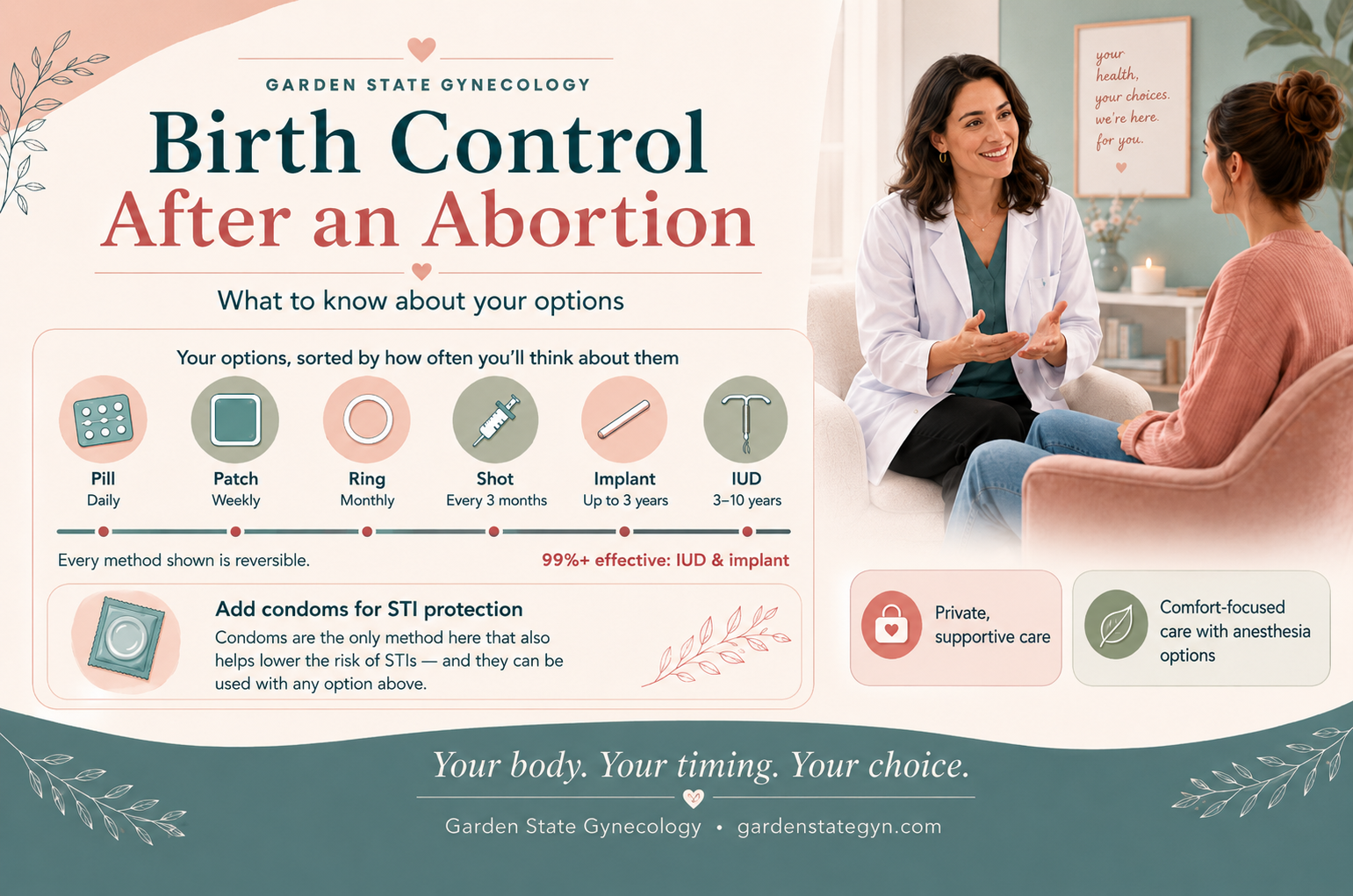
Your options may include hormonal and non-hormonal methods, such as:
- Birth control pills — taken daily and may help make periods more predictable for some patients.
- Depo-Provera/the shot — given every three months; an option for patients who do not want to take a pill every day.
- NuvaRing — a hormonal vaginal ring changed on a regular schedule.
- IUDs — small devices placed inside the uterus by a trained provider. Hormonal and non-hormonal options are available. IUDs are long-acting, more than 99% effective, and reversible.
- Other prescription options — depending on your health history and goals, your provider can discuss additional methods that may fit your needs.
- Condoms — help prevent pregnancy and reduce the risk of sexually transmitted infections, or STIs. Even if you choose another birth control method, condoms may still be recommended for STI protection.
Can you get an IUD After an Abortion?
Yes, an IUD can be placed shortly after an abortion. Timing depends on your care plan, medical history, and what feels right for you.
Some people like that an IUD means there is nothing to remember every day, week, or month. Others feel nervous about insertion, which is completely understandable. If you are worried about pain, anxiety, or discomfort, ask what to expect and what comfort options may be available.
At Garden State Gynecology, IUD insertion and removal may be available with or without anesthesia, depending on your needs and care plan.
Comfort Options That are not Always Available Elsewhere
One thing that makes Garden State Gynecology different is our focus on comfort during abortion and gynecologic care.
For patients who want additional comfort, Garden State Gynecology offers safe anesthesia services administered by board-certified anesthesiologists. Depending on your visit and care plan, options may include conscious sedation, deep sedation, or general anesthesia.
This means some patients may be able to be asleep and comfortable during certain procedures, including in-office abortion care or IUD insertion and removal. Patients who do not want anesthesia may also have local anesthetic options when appropriate.
Garden State Gynecology also works to make care accessible. Financial assistance, grant programs, and discounted self-pay rates may be available for qualifying patients. Our team can review your options, explain pricing, and help you understand what to expect before your visit.
Not Ready to Decide? That’s Okay
Birth control counseling should never feel pushy, rushed, or judgmental. You deserve clear answers, privacy, and time to choose what is right for you.
Your provider can explain how each method works, how effective it is, possible side effects, how quickly it starts working, whether you need backup contraception, and how to stop or switch methods later.
Choosing no birth control is also a valid option. The decision is yours.
Your Body. Your Timing. Your Choice
Whether you recently had an abortion, are planning abortion care, or simply want to understand your options, Garden State Gynecology is here to help. A safe, uncomplicated abortion does not usually affect your ability to get pregnant later, when the timing is right for you.
Call Garden State Gynecology or request an appointment to talk through birth control after abortion care, IUD placement, and comfort options that fit your needs.