If you’re reading this because you’re going through a miscarriage — or think you might be — we’re sorry. Whatever you’re feeling right now, whether it’s grief, shock, numbness, relief, or all of them at once, it’s valid.
Here’s what we want you to know first: miscarriage is far more common than most people realize, it is almost never anyone’s fault, and you have real choices about how your care happens. At Garden State Gynecology, we provide compassionate miscarriage treatment at our Morristown and Princeton offices, with prompt appointments and on-site sleep anesthesia if you choose a procedure.
How Common Is Miscarriage?
About 10–20% of known pregnancies end in miscarriage, and roughly 80% of those happen in the first trimester. The true number is likely higher, because many very early losses happen before a person even knows they’re pregnant.
Most miscarriages happen because the embryo had a random chromosomal difference that made it unable to develop. That means nothing you did — or didn’t do — caused this. Everyday activities — exercising, working, stress, sex, past birth control use, a past abortion — do not cause miscarriage.
If it feels like no one talks about this, that’s because they often don’t. Many people around you may have experienced a miscarriage, even if they have never spoken about it.
What Are the Signs of a Miscarriage?
Common signs include:
- Vaginal bleeding that’s heavier than spotting
- Cramping or pain in your lower belly or back
- Passing tissue or large clots
- A sudden loss of pregnancy symptoms like nausea or breast tenderness
That said, light spotting on its own doesn’t always mean miscarriage — it happens in many healthy pregnancies. And some miscarriages cause no symptoms at all. A missed miscarriage (sometimes called a silent miscarriage) is often discovered at a routine ultrasound, when the pregnancy has stopped developing but the body hasn’t recognized it yet. Learning this news with no warning can be especially disorienting.
This is a common way a miscarriage is discovered.
If you’re bleeding or cramping and don’t know what’s happening, call us at (800) 746-0148. An ultrasound and exam can tell you where things stand.
What Are My Treatment Options After a Miscarriage?
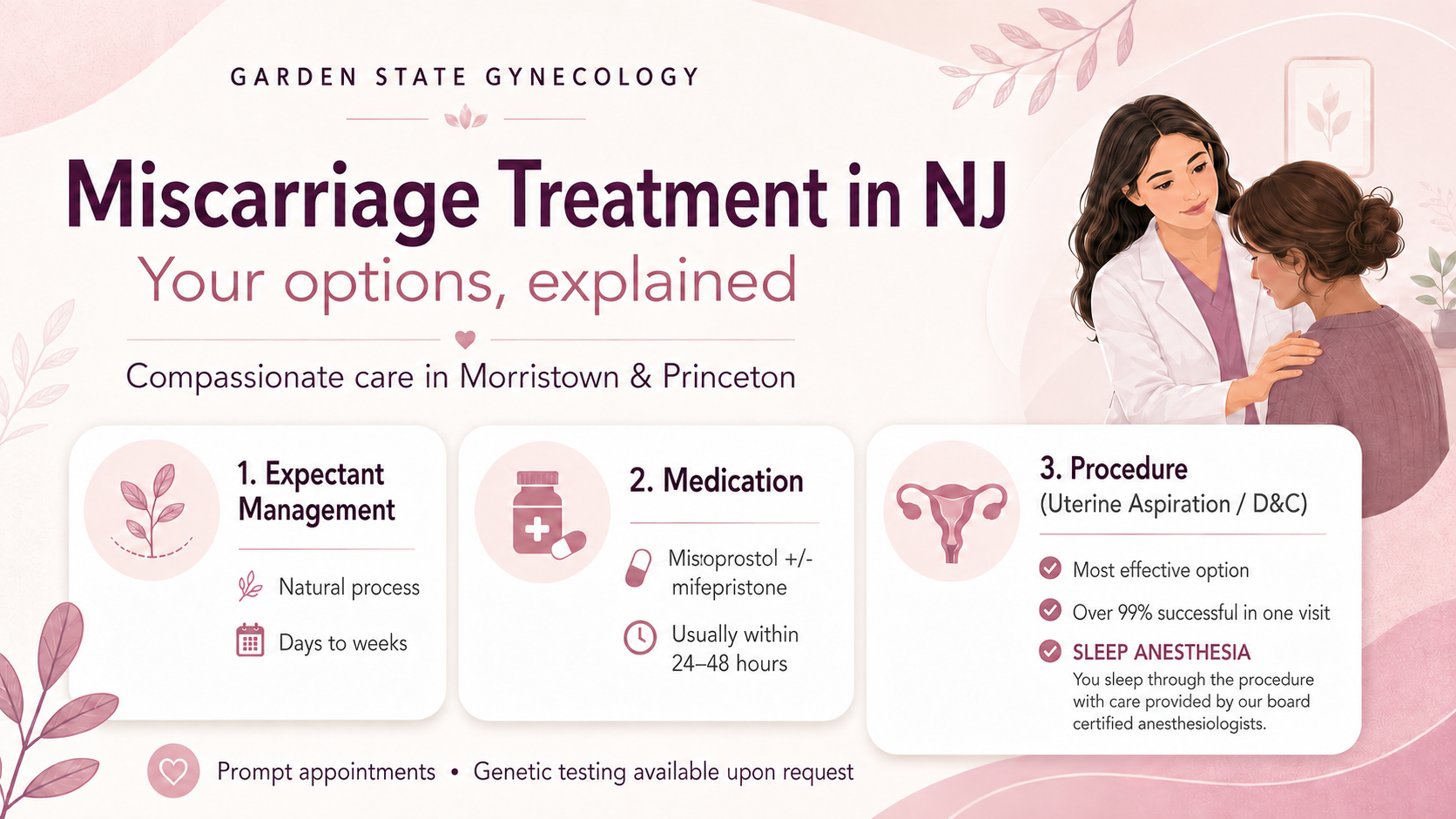
If pregnancy tissue remains in the uterus after a miscarriage is confirmed, there are three safe ways to manage it — and in most early miscarriages, the choice is genuinely yours. (Sometimes the body completes the process on its own before any treatment is needed; an ultrasound confirms this.)
1. Expectant Management: Letting Your Body Do It Naturally
Expectant management means waiting for your body to pass the pregnancy on its own, with no medication or procedure. For many people this feels like the most natural path; for others, the uncertainty is the hardest part. It can take days — sometimes several weeks — and it works best when the miscarriage has already started on its own. If the tissue doesn’t pass completely, you may eventually need medication or a procedure anyway.
2. Medication Management
Medication can bring on the process within hours instead of weeks, giving you more control over timing. Medication management uses misoprostol, which causes the uterus to contract and pass the tissue.
Depending on your clinical situation, your gynecologist may also prescribe mifepristone beforehand, which can improve the likelihood that treatment is successful. The regimen is selected based on your specific medical circumstances.
Expect strong cramping and heavy bleeding for several hours as the tissue passes, usually starting within a few hours of the misoprostol, followed by lighter bleeding for a week or two. We’ll walk you through exactly what to expect, what pain relief to use, and when to call us. Medication management works for roughly 80–90% of people, depending on the regimen; if it’s not complete, a short procedure finishes the process.
3. Procedural Management (Uterine Aspiration / D&C)
A procedure — called uterine aspiration, suction D&C, or simply a D&C — gently removes the pregnancy tissue in a matter of minutes. It’s the most effective option by a wide margin: over 99% successful in a single visit, with less bleeding and cramping afterward than the other options and no days of waiting and wondering.
Uterine aspiration for miscarriage uses the same core skills, equipment, and technique as procedural abortion care. For gynecologists who provide abortion care, uterine aspiration is a core part of daily practice — and that depth of hands-on experience helps make the procedure smooth, quick, and comfortable.
It’s also where care at Garden State Gynecology differs from many offices: as a QUAD A–accredited surgical facility, we offer local numbing or sleep anesthesia (deep sedation), administered by a board-certified anesthesiologist. Under sleep anesthesia, you sleep through the entire procedure and feel nothing during it — you wake up with the physical part behind you. Many patients choose a procedure precisely because of that closure.
A procedure is also the most reliable way to collect tissue for genetic (chromosomal) testing. If your primary OB/GYN recommends testing — often suggested after more than one loss — we can send the sample to the lab at your request.
How Do I Choose Between Them?
There’s rarely one “right” answer — it depends on your body, how far along the pregnancy was, and what matters most to you. That said, if certainty and single-visit resolution matter most to you, procedural management is usually the strongest option — over 99% effective in one appointment, and with sleep anesthesia available, comfort doesn’t have to be the trade-off.
| Expectant | Medication | Procedure |
What happens | Wait for your body to pass the tissue | Pills start the process at home | Tissue removed in a brief in-office procedure |
Timeline | Days to weeks, unpredictable | Usually within 24–48 hours | One visit, minutes long |
Effectiveness | Varies; highest if miscarriage already started | About 80–90% | Over 99% |
May be right if you… | Want to avoid intervention and can tolerate waiting | Want privacy and control over timing at home | Want the most effective option, done in one visit — asleep if you choose |
Some situations — heavy bleeding, infection, or certain medical conditions — make a procedure the recommended choice. Your provider will go over all of it with you, and the decision will be made with you, not for you.
When to Get Emergency Care
Whichever path you take, seek care right away if you experience:
- Bleeding that soaks through two or more maxi pads per hour for two hours in a row
- Fever over 4°F or chills
- Severe pain that medication doesn’t touch
- Dizziness, fainting, or feeling like you might pass out
- Foul-smelling vaginal discharge
These can signal hemorrhage or infection — both treatable, but urgent.
Recovering After a Miscarriage
- Physically: Light bleeding or spotting can last one to two weeks. Your period usually returns within four to six weeks, and ovulation can happen even sooner — so if you’re not ready to be pregnant again, use protection right away. Most people can return to work and normal activity within a day or two, though give yourself permission to take longer.
- Emotionally: There’s no correct way to feel. Some people grieve deeply; others mostly feel relief that the physical uncertainty is over; many feel both. Partners grieve too, sometimes differently. If sadness feels heavy or isn’t lifting after a few weeks, tell your provider — support exists, and asking for it is a strength.
- Trying again: Medically, most people don’t need to wait long before trying to conceive again — often just until bleeding stops and you’ve had a follow-up. One miscarriage does not mean the next pregnancy will end the same way; the vast majority of people go on to have healthy pregnancies. When you’re ready is the right time.
Miscarriage Care at Garden State Gynecology
Miscarriage treatment shouldn’t involve long waits, judgment, or being rushed through a decision. At our Morristown and Princeton offices:
- Prompt appointments, Monday through Saturday, 7 AM to 10 PM — because a confirmed miscarriage shouldn’t mean weeks of waiting
- Every option under one roof, from expectant management support to medication to same-visit procedures
- On-site sleep anesthesia — administered by a board-certified anesthesiologist in our QUAD A–accredited surgical facility, so your procedure can be as comfortable as possible
- Deeply experienced providers — uterine aspiration is a core part of our gynecologists’ daily practice, the kind of routine experience that makes for efficient, gentle, carefully performed care
- Genetic testing coordination — if your primary OB/GYN recommends chromosomal testing of the pregnancy tissue, we’ll collect the sample and send it to the lab at your request
- Support for burial arrangements — if burial or a memorial is meaningful to you, we’ll prepare the documentation funeral homes require, so you’re not managing paperwork while grieving
- Private, judgment-free, compassionate care at every step
- No legal barriers or delays — in New Jersey, your provider’s only consideration is your health and your choice
Most insurance plans cover miscarriage treatment, and our staff can verify your coverage and go over payment options before your visit.
Frequently Asked Questions
Did I cause my miscarriage?
No. Most miscarriages result from random chromosomal differences in the embryo. Exercise, stress, working, sex, and everyday activities do not cause miscarriage.
How long does bleeding last after a miscarriage?
Typically one to two weeks of light bleeding or spotting, with the heaviest bleeding during the first days as tissue passes. Call your provider if you're soaking two pads an hour for two hours.
Is a D&C for miscarriage painful?
The procedure itself takes only minutes, and at Garden State Gynecology you can choose local numbing or sleep anesthesia administered by a board-certified anesthesiologist — many patients sleep through it entirely and wake up with mild cramping.
When will my period come back?
Usually within four to six weeks. Ovulation can occur before your first period, so you can become pregnant sooner than you might expect.
When can we start trying again?
For most people, as soon as bleeding has stopped and you feel emotionally ready — there's typically no medical reason for a long wait. Confirm at your follow-up visit.
Can the pregnancy tissue be tested to find out why this happened?
Yes. Genetic (chromosomal) testing of the tissue is sometimes recommended, especially after more than one loss. If your primary OB/GYN recommends it, we can collect the sample during your procedure and send it to the lab at your request.
Results aren't always definitive, but testing can sometimes identify a chromosomal explanation.
Can I bury the remains after a miscarriage?
Yes. If burial or a memorial is meaningful to you or your family, please tell us as early as possible — ideally before your treatment — so we can plan accordingly. We'll prepare the documentation funeral homes require and coordinate next steps with you.
Does insurance cover miscarriage treatment?
In most cases, yes — miscarriage management is standard medical care. Call us and we'll verify your benefits before your appointment.
You don't have to navigate this alone
Call Garden State Gynecology at (800) 746-0148 or request an appointment at our Morristown or Princeton office. We’ll help you understand your options and support whichever one you choose.
This article is for educational purposes and isn’t a substitute for personalized medical advice. If you’re experiencing heavy bleeding, severe pain, or fever, seek medical care immediately.