
If you’re facing an unplanned pregnancy, one of the first questions you’ll need to answer is which type of abortion care makes sense for your situation. At Garden State Gynecology, patients in Princeton, Morristown, and Staten Island have two safe, medically supervised options: the abortion pill (medication abortion) and procedural abortion (surgical). Both are effective and well established, but they differ in how they work, how far along you can be, and what the experience feels like.
Here’s what to know as you decide.
How the Abortion Pill Works
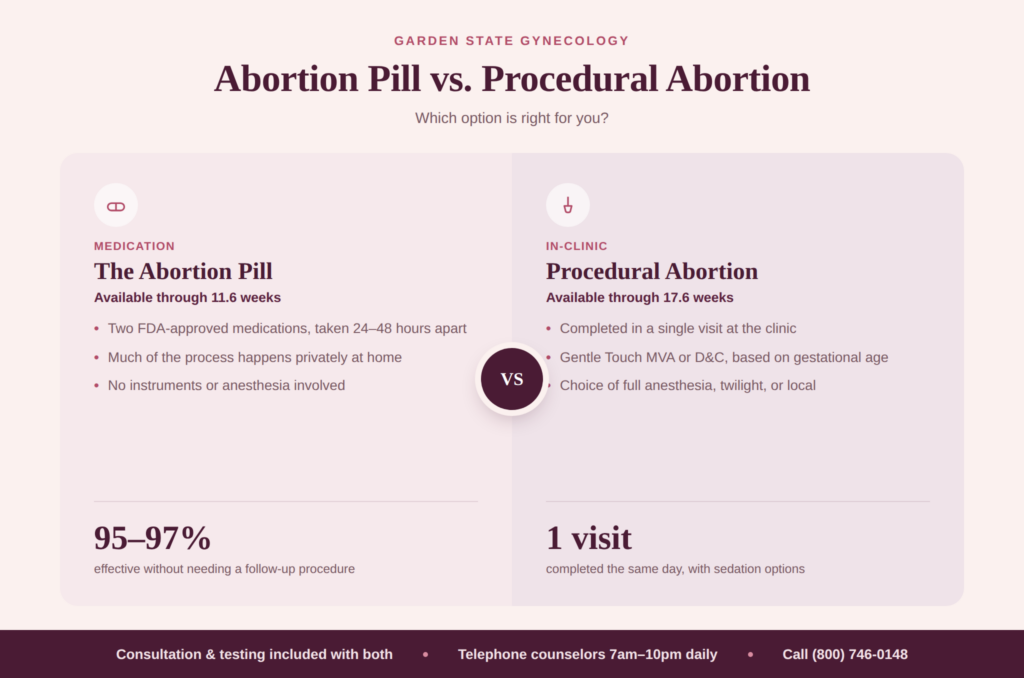
Medication abortion uses two FDA-approved medications taken in sequence. The first medication blocks the hormone your body needs to continue the pregnancy. The second, taken 24 to 48 hours later, helps your body gently start contractions, so the pregnancy passes naturally, much like a heavy, crampy period.
This option is available within the first 11.6 weeks (83 days) of pregnancy. It’s highly effective, with about 95 to 97 percent of patients completing the process, without needing any additional procedure. In the small number of cases, the medication doesn’t fully resolve the pregnancy, requiring a follow-up surgical procedure to complete the process.
Because it doesn’t involve instruments, many patients choose the pill for the privacy and control it offers, taking the second medication at home on their own schedule. Cramping and bleeding afterward are expected and normal, and the clinic provides complete aftercare instructions.
How Procedural Abortion Works
Procedural abortion is an in-clinic option available through 17.6 weeks of pregnancy, and it covers two techniques, depending on gestational age.
For early pregnancies, up to about 9 weeks, Garden State Gynecology offers the Gentle Touch Manual Vacuum Aspiration method. The provider gently widens the cervix with small dilators, then uses a thin tube and a handheld device to complete the procedure, typically in about five minutes. Patients often report less cramping and bleeding afterward compared to traditional methods.
For pregnancies further along, up to 17.6 weeks, a dilation and curettage (D&C) procedure is used. The cervix is gently opened, and the contents of the uterus are removed through brief aspiration. The exact time this takes depends on how far along the pregnancy is.
Before either procedure, every patient receives a consultation, a sonogram, and blood and urine testing so the care team can confirm gestational age and plan appropriately. You can choose from three anesthesia options: full anesthesia (asleep, administered by a board-certified anesthesiologist), deep “twilight” sedation, or a local anesthetic while staying awake. Anyone receiving anesthesia or sedation needs to fast for at least eight hours beforehand and must have a support person to drive them home.
Afterward, you’ll rest in a monitored recovery area with refreshments and receive written instructions before you’re discharged.
Key Differences to Weigh
The most immediate difference is timing. If you’re within about 11.6 weeks of pregnancy, both options are available.
Beyond gestational age, the decision often comes down to where and how you want the process to happen. The abortion pill lets you complete part of the process at home, over a day or two, without instruments or anesthesia. A procedural abortion is completed at the clinic in a single visit, with the option of full sedation, so you don’t experience the procedure at all. Some patients prefer the shorter overall timeline and the fact that it’s over the same day; others prefer the privacy and gradual nature of the medication approach.
There’s no universally “better” choice. Someone who wants to avoid in-clinic instrumentation may lean toward the pill, while someone who’d rather not manage cramping and bleeding at home, or who is past the 11.6-week window, may prefer the procedural route with sedation.
What Both Options Have in Common
Whichever path you choose, Garden State Gynecology builds the same standards of care around it. All procedures require a consultation, testing to confirm how far along you are, clear before-and-after instructions, and a recommended follow-up exam about two weeks later. Trained telephone counselors are available from 7 a.m. to 10 p.m. daily for questions during recovery, and you’re welcome to return for ongoing birth control services or a referral back to your regular gynecologist.
Cost is handled thoughtfully either way. The clinic works with funding organizations on patients’ behalf, offers an income-based sliding scale, and provides self-pay discounts described as among the lowest uninsured fees of any provider in New Jersey or New York. Free and low-cost care may be available through grant programs, and the team can review pricing and insurance details by phone.
Making the Decision
The right option depends on your gestational age, your comfort with anesthesia versus staying awake at home, how much privacy and flexibility you need, and what simply feels right to you. A consultation with the care team is available to confirm how far along you are and walk through both options in detail.
Garden State Gynecology’s team can help you sort through the medical facts and personal factors together, so whichever you choose, you feel informed and supported. Call (800) 746-0148 to schedule a consultation or ask about financial assistance.
This article is for general educational purposes and isn’t a substitute for individualized medical advice. Please consult a qualified healthcare provider about your specific situation.